
Applications
Start with your application constraints
Translate the machine duty into motor or generator requirements. Each application needs its own mechanical, electrical and acceptance boundary.
Engineering editorial · Reviewed 2026-10-21
The engineering decision
Define the boundary before the build.
Start with the non-negotiable constraints and identify what remains open to engineering recommendation. The pages below explain the information needed for review, the trade-offs to resolve and the evidence to agree before a prototype is released.
| Option | When it fits | Resolve before release |
|---|---|---|
| Frameless motors for robotic joints | Fit the motor to the joint, then validate the complete axis. A shallow axial motor can preserve a central passage for wiring, hoses and sensors. | Review inputs and acceptance criteria on the detailed program page. |
| Custom drives for UAV, AGV and marine systems | Coordinate voltage, cooling and mechanical interfaces around the vehicle. Start with the operating cycle and electrical limits of the installed system. | Review inputs and acceptance criteria on the detailed program page. |
| Disc generators for wind and range extenders | Define useful output at operating speed. A custom disc generator review connects turbine or engine torque to rectification, charging and heat removal. | Review inputs and acceptance criteria on the detailed program page. |
| Build-to-print support for motor OEMs and labs | Turn a released electromagnetic design into inspectable parts. Define drawing revisions, manufacturing scope and acceptance evidence before tooling starts. | Review inputs and acceptance criteria on the detailed program page. |
From a program direction to a reviewable brief
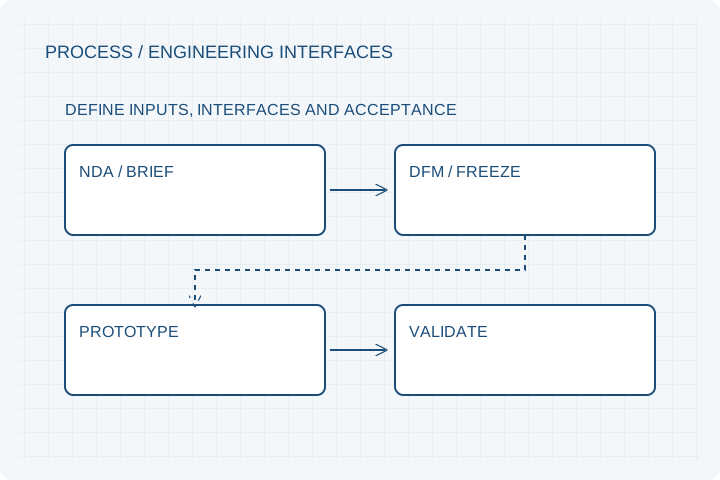
Use the specific page to collect the required dimensions, operating points and interfaces. Share sample quantity, annual volume and target schedule so the team can distinguish prototype engineering from repeat production. A 3–5 week prototype schedule is a planning target for suitable programs after DFM, material availability, drawing freeze and order confirmation; your quotation confirms the actual lead time.
Prepare your RFQ
The inputs that make a useful review.
| Input | What to send | Why it matters |
|---|---|---|
| Operating requirement | Torque or output power at speed, including peak duration | Establishes the actual duty. |
| Integration boundary | Envelope, voltage, controller and cooling conditions | Prevents interface assumptions. |
| Delivery scope | Kit, complete assembly or released build-to-print component | Assigns design and inspection responsibility. |
For confidential geometry, complete the NDA review before disclosure.
Continue your review
Related engineering programs
From constraint to a controlled brief
Bring the dimensions.
Define the evidence.
Request an engineering review ↗Prototype planning target: 3–5 weeks for suitable programs after DFM, material availability and drawing freeze. Quotation confirms feasibility, cost and schedule.