
Engineering resources
Low RPM generator sizing: torque and voltage
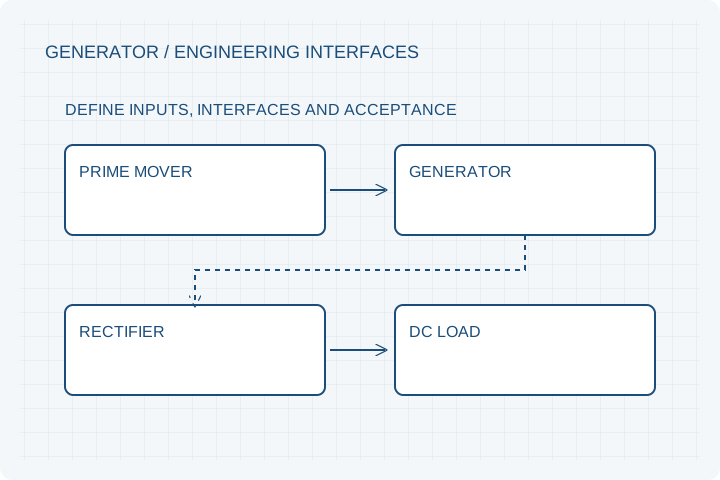
Convert the output target into a shaft torque requirement, then check voltage and loaded output. Low speed alone does not describe a generator specification.
Engineering editorial · Reviewed 2026-10-21
The engineering decision
Define the boundary before the build.
A generator advertised by open-circuit voltage can fail to deliver the expected charging current. Shaft power, copper losses, rectifier losses and converter behavior all matter. For a wind system, the turbine must supply sufficient torque at the speed where useful output is requested.
| Option | When it fits | Resolve before release |
|---|---|---|
| Mechanical input | P = T × 2π × rpm / 60. | Use shaft power in watts and torque in newton-metres. |
| Electrical output | Pout = efficiency × shaft power at a defined point. | Efficiency is not a fixed universal value across speeds and loads. |
| Charging threshold | Rectified output must suit the battery and converter. | Define cut-in using useful load current rather than unloaded voltage. |
Worked example: 1 kW at 100 RPM
At 100 RPM, angular speed is approximately 10.47 rad/s. Delivering 1,000 W of mechanical shaft power requires about 95.5 Nm. If the desired output is 1,000 W electrical, the required input torque is higher because the system has losses. For an illustrative 85% total conversion efficiency, input torque would be about 112.3 Nm. This is a sizing example, not a rating for an offered product.
Why higher voltage is not free power
Increasing turns can raise back-EMF at a given speed, but conductor space, resistance, inductance and thermal limits change. A useful winding matches the actual load and current requirement. It cannot create additional mechanical input power.
Separate startup from generation
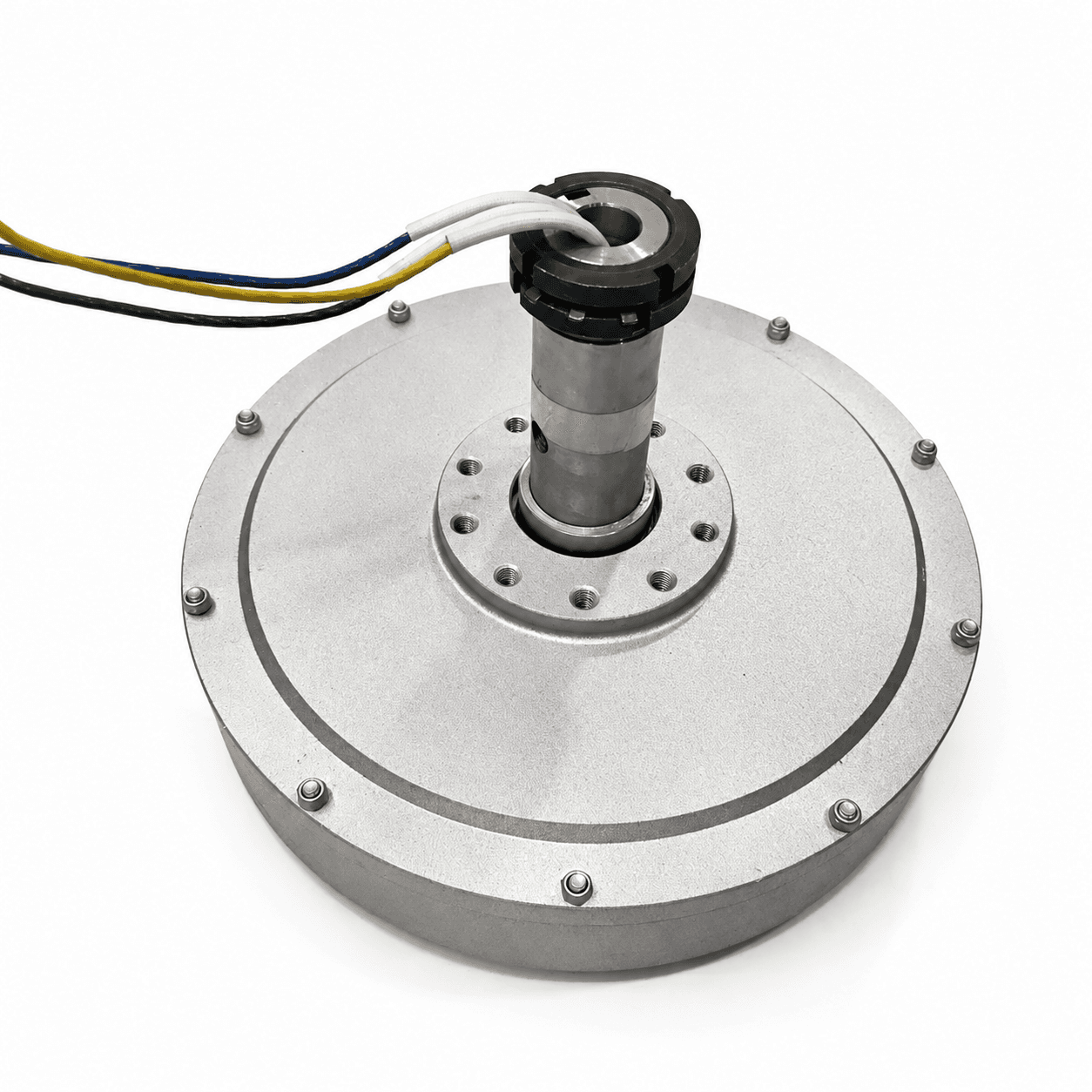
A coreless winding can avoid tooth-related cogging, but bearing friction and electrical load torque remain. Compare no-load starting torque, open-circuit voltage and loaded performance as three separate results.
What to send for a quotation
Provide a speed/output table, available prime-mover torque, maximum speed, mounting drawing, rectifier or controller details, cooling and quantities. If only turbine dimensions are known, identify that as an unresolved input rather than assuming a power rating.
Prepare your RFQ
The inputs that make a useful review.
| Input | What to send | Why it matters |
|---|---|---|
| Target power | Electrical output at each operating speed | Defines what the load actually needs. |
| Prime-mover torque | Available shaft torque versus speed | Checks whether the input can supply the requested power. |
| Load circuit | Rectifier, converter, battery range and regulation | Determines loaded voltage and charging behavior. |
| Thermal and speed limits | Cooling conditions and maximum credible RPM | Defines winding loss and rotor retention boundaries. |
For confidential geometry, complete the NDA review before disclosure.
Continue your review
Related engineering programs
Questions before you specify
Can a generator make 1 kW at any RPM?
Only if the prime mover supplies enough torque and the generator can meet its electrical, mechanical and thermal limits at that speed.
Is open-circuit voltage enough to choose a winding?
No. Request loaded voltage/current and temperature data at the intended operating points.
Does a larger magnet grade guarantee more output?
No. The magnetic circuit, winding, speed, load and heat removal must be evaluated together.
From constraint to a controlled brief
Bring the dimensions.
Define the evidence.
Request an engineering review ↗Prototype planning target: 3–5 weeks for suitable programs after DFM, material availability and drawing freeze. Quotation confirms feasibility, cost and schedule.