
Base platform programs
Low-voltage axial drive programs for 48–96 V systems
Use 48 V / 10–30 kW as an engineering brief, then check current, speed, cooling and installation constraints. 72 V and 96 V programs can be reviewed in the same system-level process.
Engineering editorial · Reviewed 2026-10-21
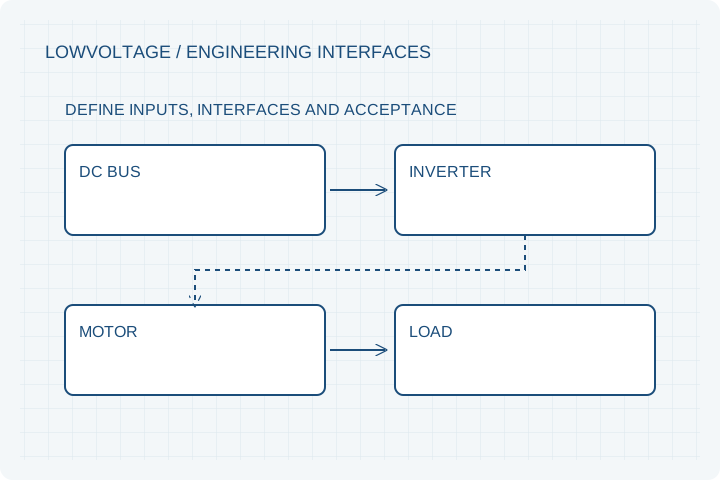
The engineering decision
Define the boundary before the build.
A low-voltage power target can imply substantial input and phase current. Connector, cable, inverter, battery and protection limits may constrain the design before the motor’s envelope does. This program page describes a custom development direction; it is not a list of interchangeable, validated 10–30 kW stock motors.
| Option | When it fits | Resolve before release |
|---|---|---|
| 48 V battery integration | An existing battery ecosystem fixes the nominal bus. | Check the full battery voltage window, current delivery and protection limits. |
| 72 / 96 V winding review | A different bus can be considered within a platform program. | Reconcile controller, insulation, back-EMF and maximum mechanical speed. |
| Motor plus controller scope | The buyer wants one reviewed electrical integration boundary. | Define feedback, communication, protection and validation ownership. |
Current is a system-level constraint
A 20 kW electrical output target with an illustrative 90% conversion efficiency at 48 V implies about 463 A of DC input current. This arithmetic is a planning example, not a motor rating or phase-current value. Confirm bus sag, cabling, connectors and inverter capability before freezing the winding.
Reuse is conditional
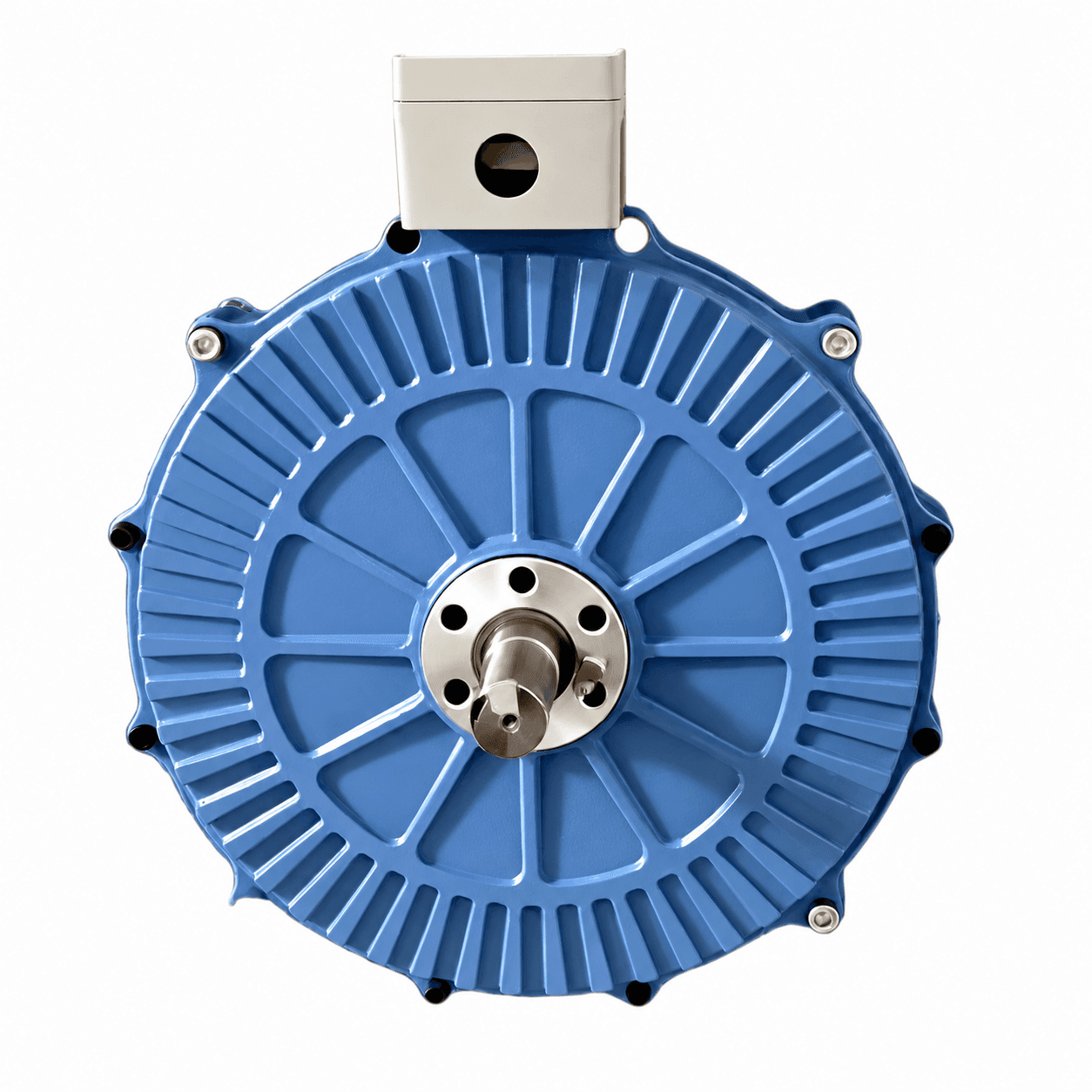
A starting platform may permit changes to winding, shaft or flange while retaining some geometry. It does not guarantee that tooling or a thermal path can be reused. Changes to speed, rotor retention, bearing loads and sealing may introduce new engineering and validation work.
Quote the operating points
Provide a table of torque, speed and duration with minimum and maximum bus voltage. Add coolant conditions and peak-current limits from the selected drive. The quotation can then distinguish engineering/NRE, prototype parts and recurring production cost.
Prepare your RFQ
The inputs that make a useful review.
| Input | What to send | Why it matters |
|---|---|---|
| Output duty | Continuous and peak shaft power/torque at defined speeds | Power alone cannot specify low-speed or stall capability. |
| Battery and inverter | Actual bus limits, DC current and phase-current convention | Reveals whether the requested operating points are electrically feasible. |
| Mechanical integration | Envelope, shaft, bearings, mounting and propeller/wheel loads | Keeps the motor quote aligned with the machine interface. |
| Cooling | Ambient/coolant range and available heat-rejection interfaces | Governs continuous operation and repeated peaks. |
| Commercial route | Sample count, annual forecast and controller scope | Determines what platform reuse and NRE assumptions are realistic. |
For confidential geometry, complete the NDA review before disclosure.
Continue your review
Related engineering programs
Questions before you specify
Is 30 kW available from any 48 V configuration?
No. A nominal power request needs current, duty, cooling and speed conditions. The program must establish those limits before it can be treated as a rating.
How large might the input current be?
For illustration only, 20 kW shaft power at 90% efficiency and a 48 V bus implies about 463 A DC input: I ≈ P/(ηV). This is not phase current, a component rating or proof that a design can deliver that point.
Can winding changes alone convert a 48 V design to 96 V?
They may be part of the change, but the review also covers insulation, inverter, speed, sensors, thermal loading and mechanical limits. It is not an automatic conversion.
Which applications fit this review?
AGV/AMR, UAV auxiliaries, marine or other battery-powered machines can be discussed. Aviation, marine and vehicle compliance remain separate program requirements.
From constraint to a controlled brief
Bring the dimensions.
Define the evidence.
Request an engineering review ↗Prototype planning target: 3–5 weeks for suitable programs after DFM, material availability and drawing freeze. Quotation confirms feasibility, cost and schedule.